

Catalog Obsessions
Muse #46: A brief history of the lore of mail order
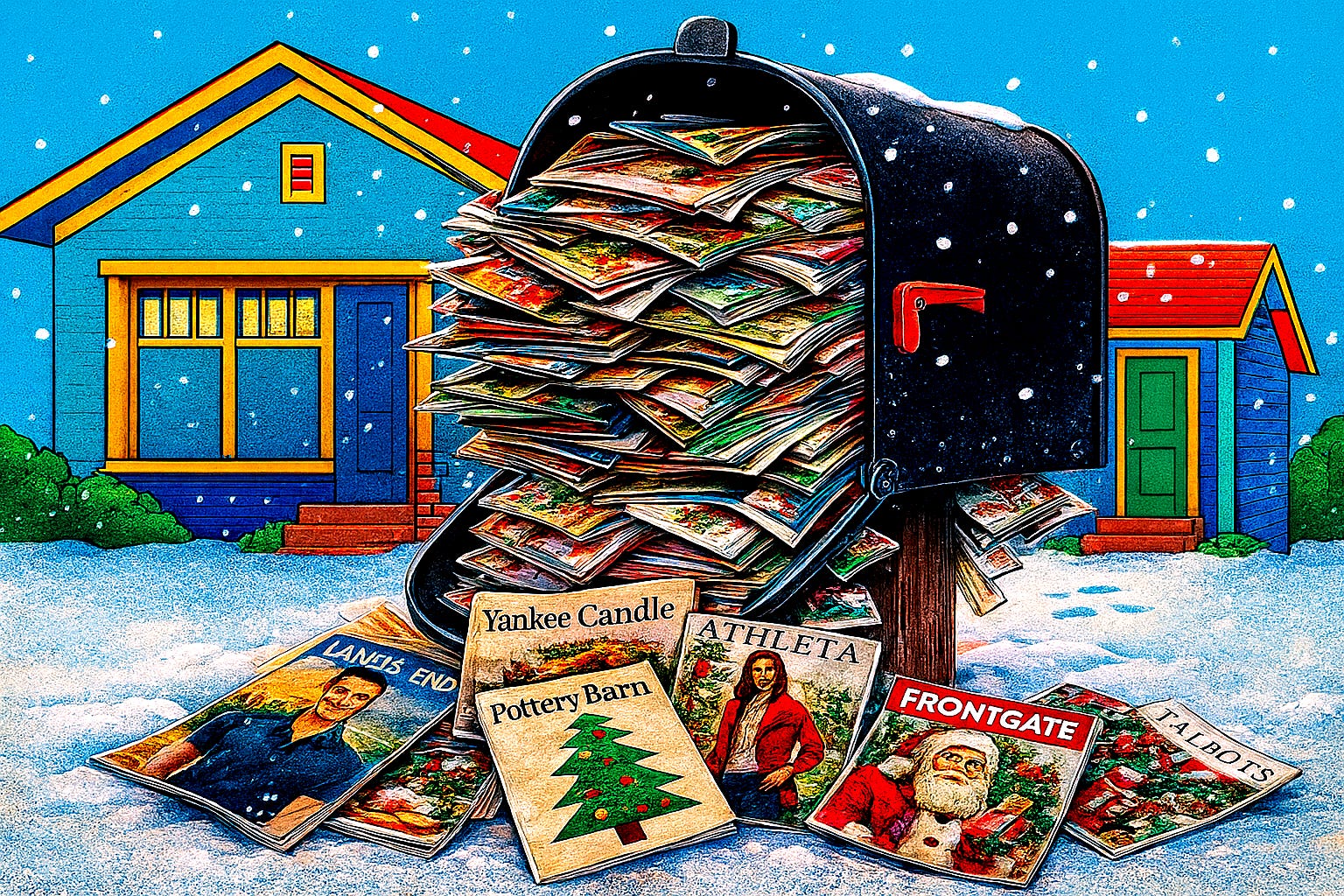
Predictions of the imminent demise of mail-order catalogs have proven to be premature.
Just check your mailbox. As we approach the holidays, they may be the only thing in there that’s not a bill.
In fact, catalogs are so prevalent, you may be one of millions who have a catalog-induced illness. If so, I’ll tell you how to get help in just a moment.
But first, a brief history of their rise and almost fall.
The first catalogs, as we now know them, coincided with the postal service’s new “rural free delivery” in 1896. It enabled stores like Montgomery Ward and Sears Roebuck to reach consumers in remote areas for the first time.
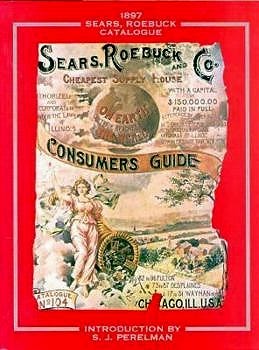
The 1897 Sears Catalog was more than 700 pages of clothing, furniture, firearms, musical instruments and more. It even had seven pages of miracle elixirs like Brown’s Vegetable Cure for Female Weakness, Dr. Rose’s French Arsenic Complexion Wafers and Sears’ own Reliable Worm Syrup — an RFK Jr. favorite.
Perhaps most impressively, you could even buy a house. Its Modern Homes edition featured hundreds of “pre-fabs” (also called kit houses); a customer would place an order and wait for a train to arrive with about 30,000 coded pieces, 750 pounds of nails, 10 pounds of wood putty, 27 gallons of paint and varnish, 460 pounds of window weights and 400 feet of sash cord.
And you thought putting together a SMASTAD loft bed from Ikea was tough.

A brand-new Sears Modern Home #158 would run you about $1,500. In 2025 dollars, that’s about $57,631. Which, in most metro areas, would buy you this:

Or, if in NYC or San Jose, this …

Ah, must’ve been great to be alive in 1906.
Many other great catalogs would soon follow, such as L.L. Bean, Hammacher Schlemmer, and Spiegel, creating a dynamic new sales channel during economic expansion and the massive suburban migration.
And, before long, cataloging would even reach into the skies. Frequent fliers will fondly-ish remember the Sky Mall catalog that appeared in their seat-back pockets on most flights in the 1990s.
More boredom relief than an actual shopping vehicle, it featured products such as nose hair removers, floating poker tables, lip enhancers, and a 14-gallon no-spill portable gas pump.

It’s been said that an untold number of flights would have been hijacked during the reign of the Sky Mall catalog if not for terrorists being distracted for the entirety of their trip trying to decide which size of Ninja Turtle Adult PJs to order to send back home.

(I, for one, was obsessed with the deluxe massage chair from the Sharper Image pages of the Sky Mall. But I never could get beyond the fact that it was one ugly piece of furniture.)
Ultimately, the Sky Mall catalog went out of business, obscured by the Internet and facing fierce competition from in-flight magazines, which, also in the seat-back pocket, routinely featured a section on The Best Doctors in America. Passengers would spend hours perplexed at why anyone would “shop” for a doctor on an airplane, while giving googly eyes to the perfect specimens of humanity in the ads.
While Sky Mall was crashing and burning, the absolute peak of mail-order cataloging came in 2014, when Restoration Hardware mailed a shrink-wrapped, 17-pound collection of 13 catalogs all at once to showcase their luxury furniture and home accessories.

The company’s CEO championed their “source book” strategy to counter online experiences, cut through the digital noise, and consolidate multiple mailings to save costs.
Environmentalists moaned that it was a snooty, colossal waste of natural resources.
Postal workers complained that it was too heavy to carry.
But exercise enthusiasts on a budget cheered its dual purpose as dumbbells.

Had the catalogs been produced more recently, it would surely have been upgraded to an Apple Studio step class.

And people with magazine racks in their bathrooms were grateful for all the content they had handy to keep them occupied while on the throne after a week or so of fiber-free eating.
Since then, catalogs have settled into a dual role: catering to specific passions (what marketers call segments) and serving as a bridge between the physical world and online storefronts.
Bad Catalog Behavior
If your mailbox is overflowing with catalogs, it’s undoubtedly because you’ve ordered from one.
Once you do, it’s like inviting a bed bug into your house; they multiply very quickly. (Did you know a female bed bug can lay as many as five eggs every day? They clearly have more fun in bed.)
As the catalogs pile up, it’s not uncommon to develop Catalog Hoarding Obsession (CHO). This is when you think you need to hold onto your Pottery Barn or Victoria’s Secret catalogs for “future reference.” (Wink, wink.) Those with this condition may want to consider NACHOS instead (nix all catalog hoarding obsession sessions).
Coffee Table Cataloging is an affliction in which some people are too cheap to buy a photo book and instead display their catalogs openly. This is relatively uncommon now, though, given that most younger generations don’t even know what a coffee table is.
By far, the most common disorder is excessive catalog shopping. For this, you can call the Compulsive Catalog Shopper Hotline. Expect something like this:

CCSH: Hello, thanks for calling! Who do I have the pleasure of speaking with?
SHOPPER: Uhh, let’s just say my name is Tiffany.
CCSH: Ok, Tiffany, nice to meet you! Tell me about your obsession.
SHOPPER: I open a catalog: I buy something. I close a catalog: I think about what I didn’t buy. So I open the catalog again and buy some more. I then get the stuff I ordered in the mail, wonder why I bought it in the first place, and return it.
CCSH: You have excessive coveting syndrome, Tiffany.
SHOPPER: Excuse me?
CCSH: It’s very common. You crave the anticipation of receiving something new, but the actual items you yearn for can never live up to the expectations you have for them.
SHOPPER: Sounds deep.
CCSH: Worry not, Tiffany! For just $59.99, I can send you something that will solve your syndrome.
SHOPPER: What exactly is it?
CCSH: Some would call it an envelope. We call it a Catalog Concealing Device. You put your catalogs in it before you look at them.
SHOPPER: I don’t know …
CCSH: Order it now, and I can ship it to you, absolutely free!
SHOPPER: I think I’ll …
CCSH: Before you say no, because you seem like such a nice person, we’ll also send you our patent-pending Stink Away spray — a $19.99 value — for only $5.99.
SHOPPER: Stink Away spray?
CCSH: Yes, mam. Made with real stink bug juice. Just spray a tiny bit on your catalogs when they arrive in the mail, and watch as you put them in the Catalog Concealing Device faster than you can say “step on it!” You’ll toss them before you’ve ever had the chance to be swayed.
SHOPPER: Are you upselling me on a compulsive shopping help line?
CCSH: Well, you can call it upselling. We call it counseling. We’re consultants.
SHOPPER: That’s crazy. I think I’ll pass on this one.
CCSH: As you wish, Tiffany. If you change your mind, you know where to find us. Happy holidays!
SHOPPER: And to you.
Okay, the Compulsive Catalog Shopper Hotline may not be the best remedy after all. So go ahead, enjoy your catalogs. They give you permission to browse a store without a sales associate stopping you every twenty feet to ask “How ya doin’ today?” or “Can I help you find something?”
Come to think of it, that may be the “secret sauce” of catalogs after all.
That 17 pound Restoration Hardware catalog collection nearly ended my career.
I'm convinced it was designed by someone who'd never lifted anything heavier than a latte.
We started a support group called "Backs Against RH" where we'd meet weekly to complain and compare chiropractor bills. It's true Rich!
I'm bemused nowadays when I get a catalog, which isn't very often even during Conspicuous Consumption Season.
And even they have type all over directing you to their websites now.
I think a few of those Sears houses may still be standing, which is more than you can say for Sears stores.