

Games to Play While Waiting for Your Doctor
How patients can keep busy as they wait for treatment (Muse #62)
Used to be that, while sitting idly in the waiting room for a doctor’s assistant to call your name, you had options:
There were five-year-old issues of People magazine to peruse for celebs in bikinis, Architectural Digest to gape at how inferior your own home was, or Newsweek to remind you how gross a magazine can be when it’s been touched by hundreds of people with sickly hands
Then there were the magazines that you knew your doctor had personally selected, like Pus and Phlegm Weekly, Sexy Sutures Journal, and of course, Money
And there was Highlights, in which parents had more fun with the What’s Wrong page than their kids, for whom it was intended
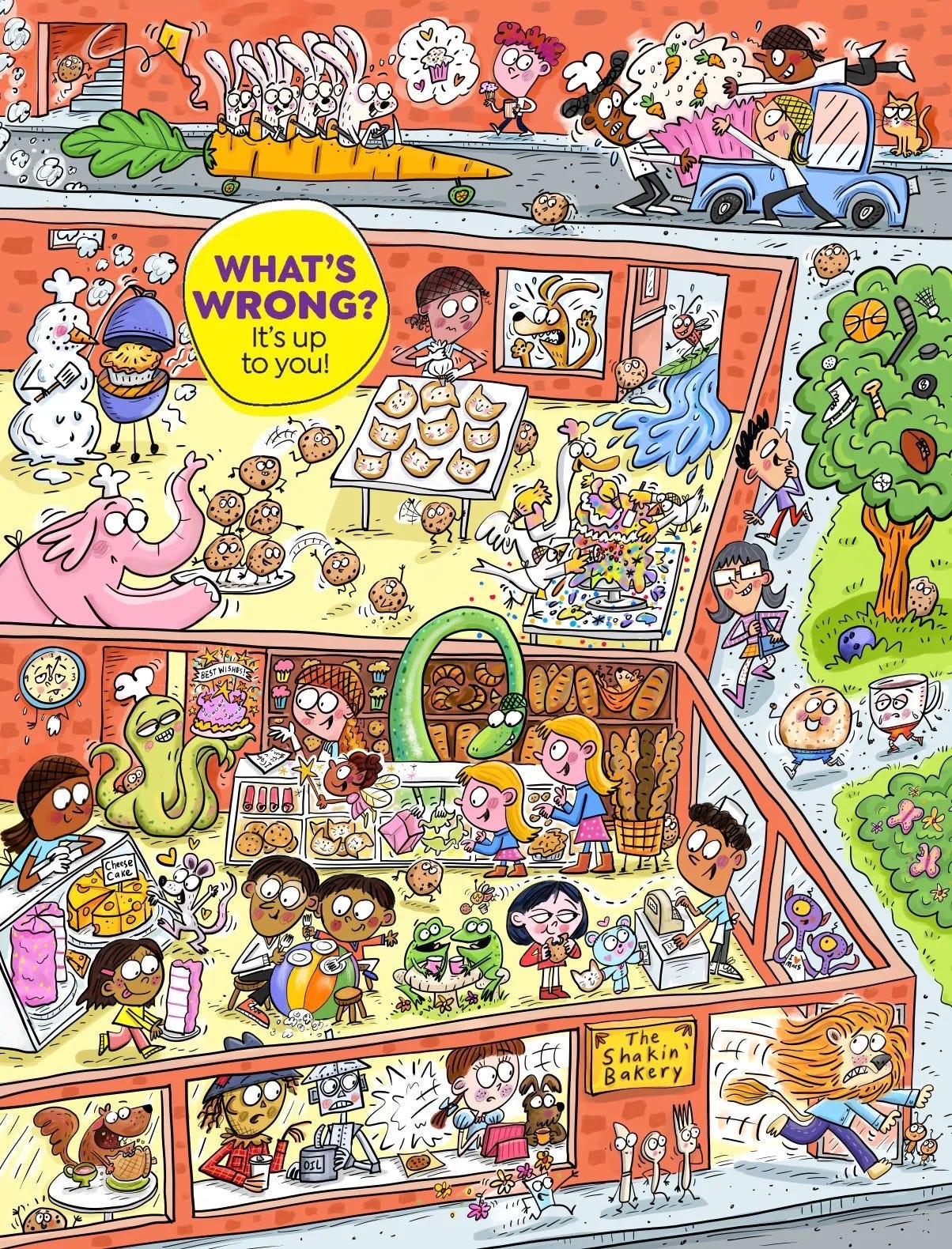
Today, you’d be hard-pressed to find magazines in any reception area. Did they become too expensive? Were patients stealing them? Did the What’s Wrong? page ruffle some feathers?

Hard to say. But I do know this: aside from staring at your phone, there’s seemingly only one thing left to do — steal a glance at other folks in the room and ponder what brings them to the doctor.
Does the guy across the way, who’s coughing incessantly, have the measles, making it time to skedaddle? Or is he simply reacting to the Britney Spears Fantasy perfume on his wife, who's sitting next to him, which I can smell from where I am?
Is the older woman who is growling and sweating profusely, carrying a gun? Or is she simply anxiety-ridden because she’s due for a colonoscopy?
And why is that teenager staring at me? Does she think I have an STD? And why am I even thinking that?
At the end of the day, this isn’t healthy.
A cynic would say that most doctors couldn’t care less what your experience is like in the waiting room… That they are medical professionals, not Disney theme park directors.
Not Dr. Wiley Whitkoff, a general practitioner in Kill Devil Hills, NC. His unique approach to the patient experience, and the chain reaction it caused, caught the attention of healthcare observers worldwide.
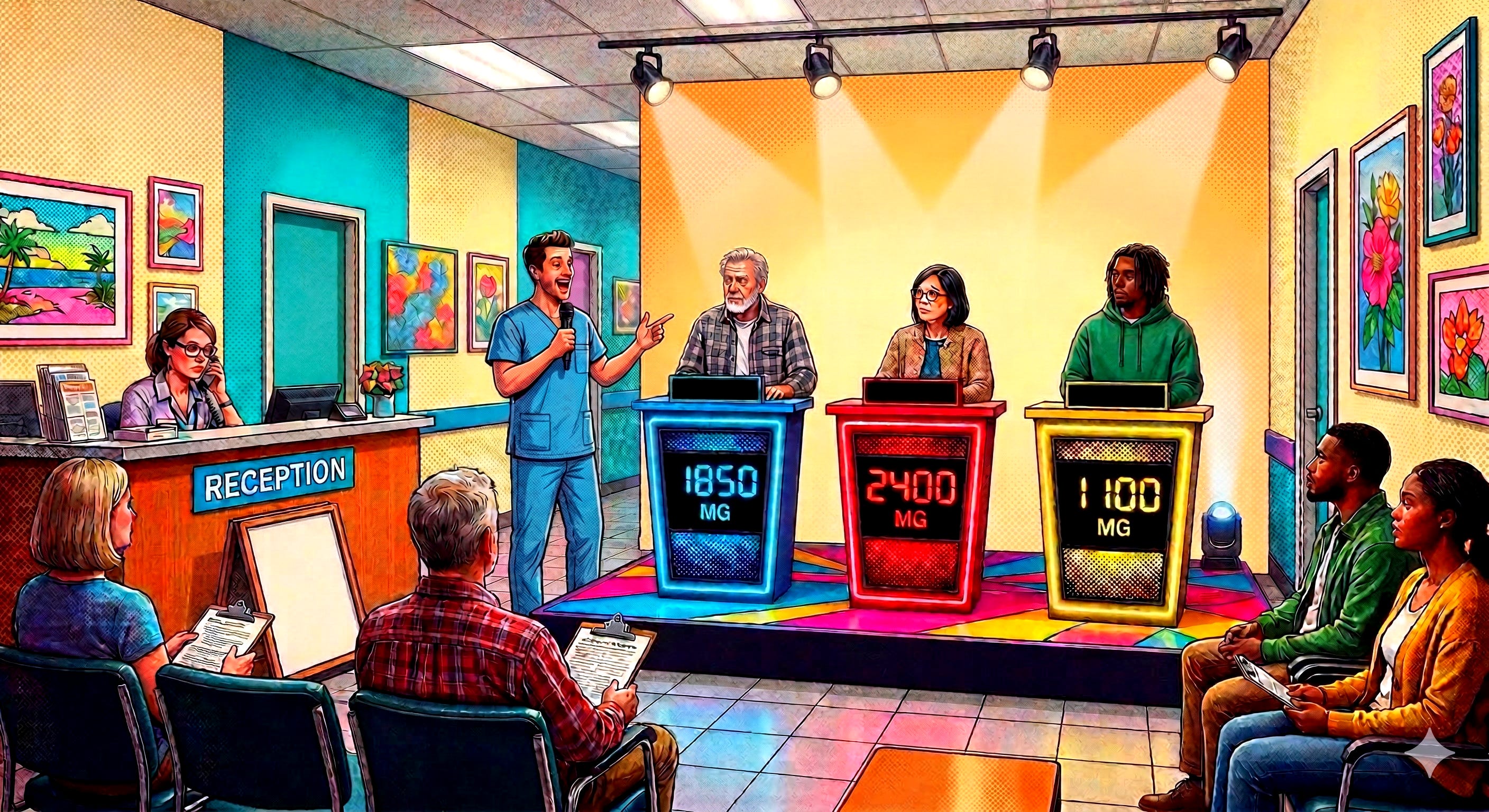
It’s time to play Jeapordia!
When you checked into Dr. Whitkoff’s office, you had to do more than just complete a typical patient questionnaire. You were required to register to play Jeopordia — the game in which you could win up to 3,000 milligrams of your favorite Rx.
“It’s a great mechanism for teaching my patients how to better understand the perils of self-diagnosis, and giving back,” said Dr. Whitkoff.
A typical game, lasting about 10 minutes, would have questions like:
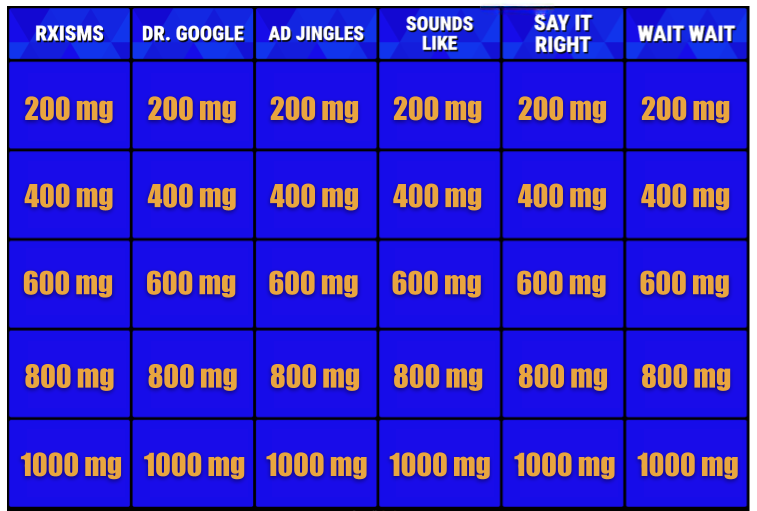
So…

Answer: What is “getting rizzed on an airplane?”

Answer: What is “O-o-o-Ozempic!”

Answer: What is “Jerkovy?”

Answer: What is “how much more do I always seem to weigh at the doctor’s office than I do at home?”
And in every game, a Dr. Google question was “75%.” And the answer: “What is, how often do people misdiagnose themselves searching online?” At that point, the emcee would give a short lecture on the perils of taking health information out of its proper context.
Within weeks of introducing Jeopordia to his waiting room, new patients were lining up at the door to get an appointment with Dr. Whitkoff.
Not to be outdone, Dr. Salmon Filletsk tried a version of Who Wants to Be a Millionaire in his office, which was a colossal failure. For one, it took even longer to complete than the average patient waiting time. And more importantly, nobody could get past the first question: “How many years does it take to become a practicing doctor?”
And Dr. Janet Whitless tried to get into the game as well by installing several flotation tanks in her waiting room, calling it Float & Win. “No magazines, no cell phones, no awkward stares, it’s just complete sensory deprivation to free your mind and reconnect with your body,” she said. The concept was doing pretty well, despite the awkwardness of having to put on a medical bathing suit, until one tank experienced a defective lid, which entrapped the patient inside and required the fire department to free her. Whitless was sued for malpractice.

But it was Dr. Elmer Aily who really took it a step too far when he created a Waiting Room Escape Room experience that required patients to complete tasks, such as correctly pronouncing drug names like “Ixabepilone,” before they could move on. If they answered “IZA-BAH-LONEY,” as many did, they remained locked in.*
Another escape room task required the patient to disrobe, put on a medical gown, and tie a Boy Scouts knot with the tie closures behind their backs. “I can barely tie my shoes,” said one frustrated participant. So many patients missed their appointments that Aily’s practice took a huge financial hit.
As word got around that Dr. Whitkoff had unwittingly created an ill-advised craze throughout the medical establishment, he abruptly shut down Jeopaordia, and all his would-be copycats put an end to their shenanigans as well.
Waiting rooms were returned to their homogenous, boring origins. And patients, without magazines to divert their attention, returned to their phones and private thoughts.
“At the end of the day, it’s fun to play games, but not with your health,” said Dr. Whitkoff, basking in what he thought was a pearl of genuine wisdom. “If there ever were a place to embrace boredom, it’s in the waiting room. Look inward, not for a magazine.”
🩺 Do Dr. Whitkoff a solid and like, restack and share this post so that other people lacking patience can discover it.
*Correct pronunciation: ix-ah-BEH-pill-own.
I fully believe patients were stealing them. I may or may not have left a waiting room in 2009 with a 2006 issue of People tucked under my coat. Jennifer Aniston was on the cover and I felt she deserved a better home than a gastroenterologist's waiting room.
Wassup Richard!!!
Most waiting rooms these days play endless loops of home makeover shows especially the ones of those smug twin brothers who never sweat when knocking down drywall.